
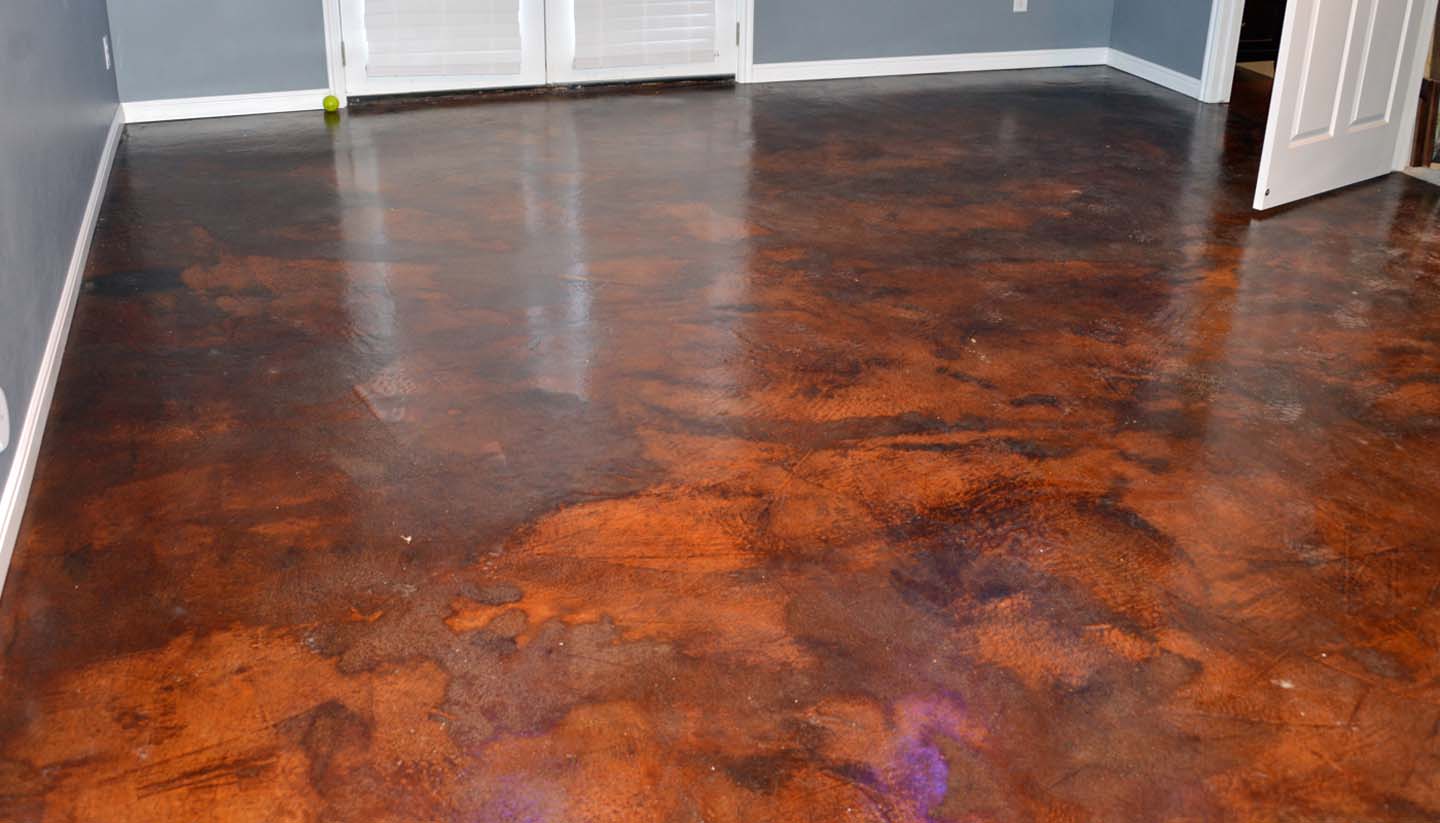
Common Basement Floor Problems in Utah and What to Do About Them
When homeowners start thinking about finishing their basement, the concrete floor usually isn’t the most exciting part of the conversation. They’re thinking about bedrooms, bathrooms, flooring, paint colors, and what they’re going to do with the family room.
But once we start looking closely at the basement, the concrete slab can become a pretty important part of the project.
Basement floors aren’t always perfectly flat. It’s common to find small cracks, rough areas, dips, high spots, and other imperfections. Most of these aren’t a problem when the basement is unfinished. Once you want to install carpet, tile, or luxury vinyl plank (LVP), however, they can matter quite a bit.
We’ve run into everything from a few small areas that needed to be touched up to floors that required several days of work before we could install the finished flooring.
The good news is that most concrete floor problems can be dealt with. The important thing is finding them before the new flooring goes down.
Why Basement Floors Aren’t Always Perfectly Flat
A basement slab doesn’t need to look like a finished floor when the house is built. It’s concrete, and some variation in the surface is normal.
You may notice trowel marks, small dips, high spots, cracks, or gradual changes in elevation across the basement. Sometimes you’ll never notice these things until you start preparing the basement for flooring.
Carpet is fairly forgiving. LVP and tile aren’t.
LVP needs a reasonably flat surface so the planks can lock together and stay supported underneath. If there’s a low spot, the flooring can flex when you walk over it. Over time, that movement can put additional stress on the joints.
Tile has its own challenges. Significant high or low spots can make installation difficult, and movement underneath the tile can contribute to cracked tile or grout.
That’s why we take a closer look at the slab before deciding how much preparation it needs.
Cold Basement Floors Are a Reality in Utah
If you’ve spent much time in an unfinished Utah basement during the winter, you already know how cold that concrete can get.
The slab is sitting against the ground, so even when the basement itself is heated, the floor can still feel cold underfoot. Your flooring choice can make a noticeable difference in how comfortable the finished basement feels.
Carpet is probably the warmest and most comfortable option. A good carpet pad creates another layer between your feet and the concrete, which is one reason carpet continues to be such a popular choice for basement bedrooms and family rooms.
Hard surfaces are different.
LVP is durable and looks great, but it won’t feel as warm as carpet. Tile can feel colder still, which becomes especially noticeable in a basement bathroom when you’re walking around barefoot.
One option we’ve installed for homeowners is electric radiant heat underneath bathroom tile.
It’s a relatively simple upgrade that can make a basement bathroom much more comfortable. On our projects, adding electric floor heat to a typical bathroom is often around $500, although the exact cost depends on the size and setup of the room.
It’s not something everyone needs, but if you hate stepping onto a cold tile floor in the middle of a Utah winter, it’s an upgrade worth considering.
Cracks in Basement Concrete Are Pretty Common
Seeing a crack in your basement floor can be alarming, especially if you’ve never paid much attention to the slab before.
But cracks in concrete aren’t unusual.
Concrete shrinks as it cures, and homes and soils can experience some movement over time. As a result, we regularly see small cracks in basement slabs, including in relatively new homes.
The first thing we want to know is what kind of crack we’re looking at.
A small, stable crack is very different from a crack that is widening, showing vertical displacement, or accompanied by other signs of movement.
As a practical rule of thumb, we pay closer attention when a crack gets to around 1/4 inch wide, and cracks that continue growing deserve further investigation. Depending on what we find, a crack may simply need to be cleaned and sealed, while more significant movement may need to be evaluated before the basement is finished.
The important thing is not to simply cover a questionable crack with new flooring and forget about it.
Uneven Floors Can Cause Problems With LVP
Of all the flooring options we install, LVP is probably where homeowners are most likely to notice an uneven slab.
LVP is a floating floor, and it needs support underneath it. If there’s a dip in the concrete, the flooring can bridge across that low spot rather than sitting firmly against the floor.
Then you step on it.
You can sometimes feel the plank move slightly underneath your foot. Enough movement over time can put stress on the locking joints and eventually cause problems.
High spots can create similar issues.
Depending on the condition of the slab, we may be able to grind down a high area or fill a low area without doing anything to the rest of the basement.
Other floors require considerably more work.
Sometimes the Entire Floor Needs to Be Leveled
We recently finished a basement in Orem where the homeowner wanted LVP throughout the basement.
Once we evaluated the concrete, it became clear that installing LVP directly over the existing slab wasn’t a good idea. There was simply too much variation across the floor.
The homeowner decided to have the entire basement floor leveled before we installed the LVP.
It wasn’t a small job.
The basement was about 1,000 square feet, and the leveling work took roughly four days and cost about $4,300. The process also created quite a bit of dust, as concrete preparation often does.
That’s a more extreme example. Most of the basements we finish don’t require that level of preparation.
But it illustrates why we don’t recommend ignoring an uneven slab just because it will eventually be covered by flooring. If you’re spending the money to install a new floor, you want to give that flooring a good surface to sit on.
What Can Be Done About an Uneven Basement Floor?
The solution depends on what’s actually wrong with the floor.
A high spot may be ground down. A localized low spot may be filled. Larger areas can sometimes be corrected with floor-leveling products. If the entire slab has significant variations, more extensive preparation may be necessary.
We don’t automatically level every basement floor.
That would add a lot of unnecessary expense to projects that don’t need it. Instead, we look at the flooring you’re planning to install and the condition of the concrete underneath it.
Carpet, for example, can tolerate imperfections that would be much more noticeable under LVP.
The goal isn’t necessarily to make an old concrete slab perfectly level. It’s to get it into the condition required for the flooring you’re putting over it.
Moisture Is a Different Kind of Problem
An uneven floor is one thing. Water coming through or around the slab is something else entirely.
Fortunately, significant water problems aren’t something we encounter on most of the Utah basements we finish. Newer homes have waterproofing requirements intended to keep groundwater outside the foundation.
But that doesn’t mean moisture problems never happen.
We worked on one basement in Salt Lake City where water intrusion had to be addressed before the basement could realistically be finished.
The solution involved cutting into several areas of the concrete floor, installing drainage, and adding a sump pump to collect and remove the water.
That project cost the homeowner about $5,500, but it solved a much bigger problem. There would have been little point in installing drywall, carpet, and other finishes until we knew the water was under control.
That’s an unusual example, but it demonstrates an important rule with basement finishing: don’t cover up a moisture problem and hope it goes away.
Find out where the water is coming from and fix that first.
Do You Need a Subfloor?
Not every Utah basement needs a separate subfloor system.
In many basements, flooring can be installed over properly prepared concrete using the appropriate underlayment or installation method. In other situations, an insulated subfloor or moisture-management system may be worth considering.
It depends on the slab, the flooring you’re using, moisture conditions, ceiling height, and how much you want to spend.
This is another area where we don’t think there’s one answer that’s right for every basement.
If the existing concrete is dry, reasonably flat, and in good condition, there’s no reason to complicate the project unnecessarily. If there are specific problems we’re trying to solve, then additional floor preparation may make sense.
Choose Your Flooring With the Concrete in Mind
We usually recommend choosing basement flooring based on how the room will be used as well as what’s underneath it.
Carpet works particularly well in bedrooms and family rooms where warmth and comfort matter. It’s also more forgiving of minor imperfections in the slab.
LVP is durable, easy to clean, and works well in high-traffic areas, game rooms, laundry areas, and spaces near wet bars. The tradeoff is that the concrete needs to be flat enough for the flooring system.
Tile is extremely durable and is a natural choice for bathrooms, but it can feel cold underfoot. That’s where electric floor heat can be a nice upgrade.
You can also mix flooring throughout the basement. We regularly use LVP in one part of a basement and carpet in another.
There’s no reason the entire basement needs the same flooring.
Fix the Concrete Before You Cover It
Concrete floor preparation isn’t the part of a basement finish that anyone is going to show off when friends come over.
Nobody walks downstairs and says, “You should see how flat the concrete is underneath this flooring.”
But they’ll notice if the LVP moves when they walk across it. They’ll notice a cold bathroom floor. And they’ll definitely notice if moisture starts coming through after the basement has been finished.
That’s why we prefer to deal with these problems while the basement is still unfinished and everything is accessible.
Most Utah basement slabs don’t require thousands of dollars of repair or leveling. Often, preparation is fairly straightforward. But when we do find a problem, it’s much better to know about it before the flooring goes down.
A beautiful floor starts with what’s underneath it.
continue reading
Related Posts
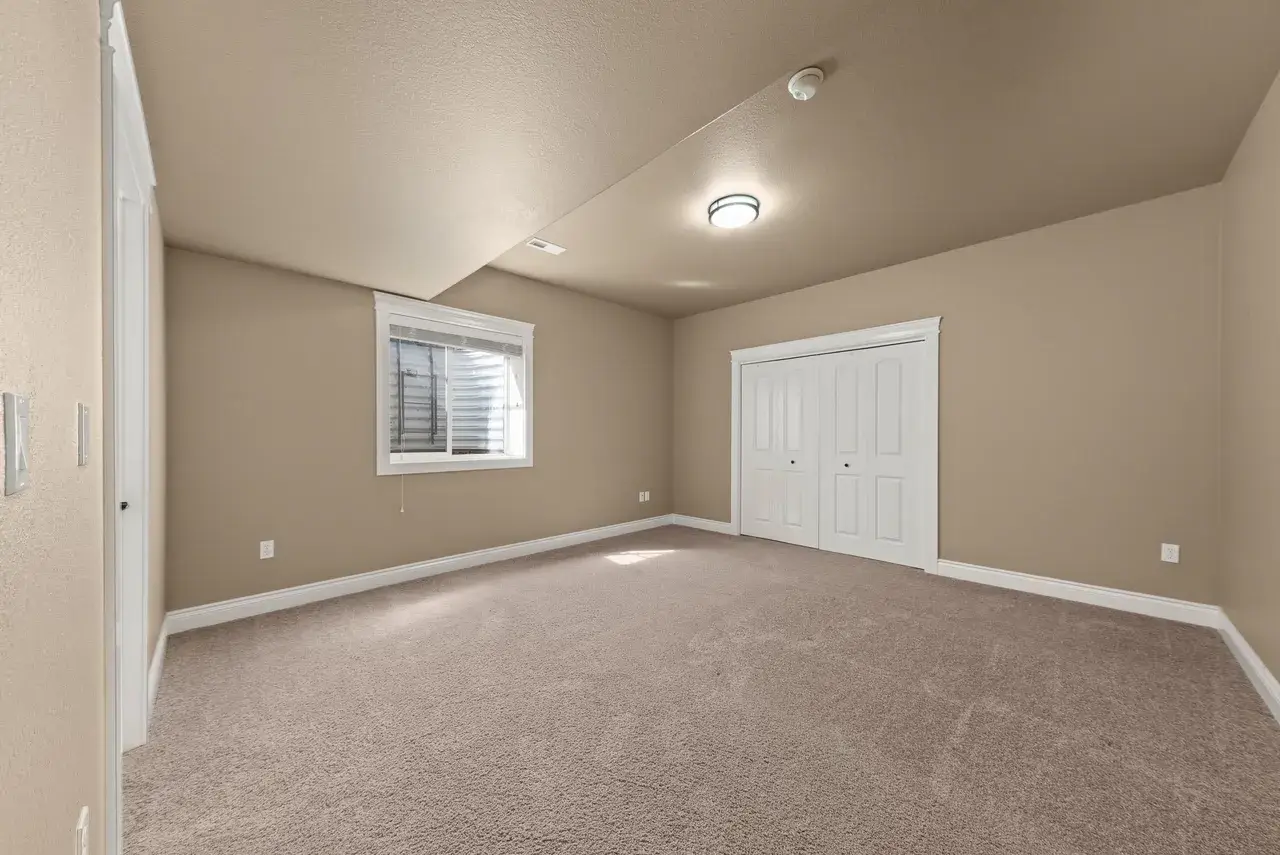
An 8-foot basement ceiling doesn’t have to feel low or cramped. With the right lighting, colors, flooring, layout, and a few smart design choices, you can make your basement feel taller, brighter, and more open.
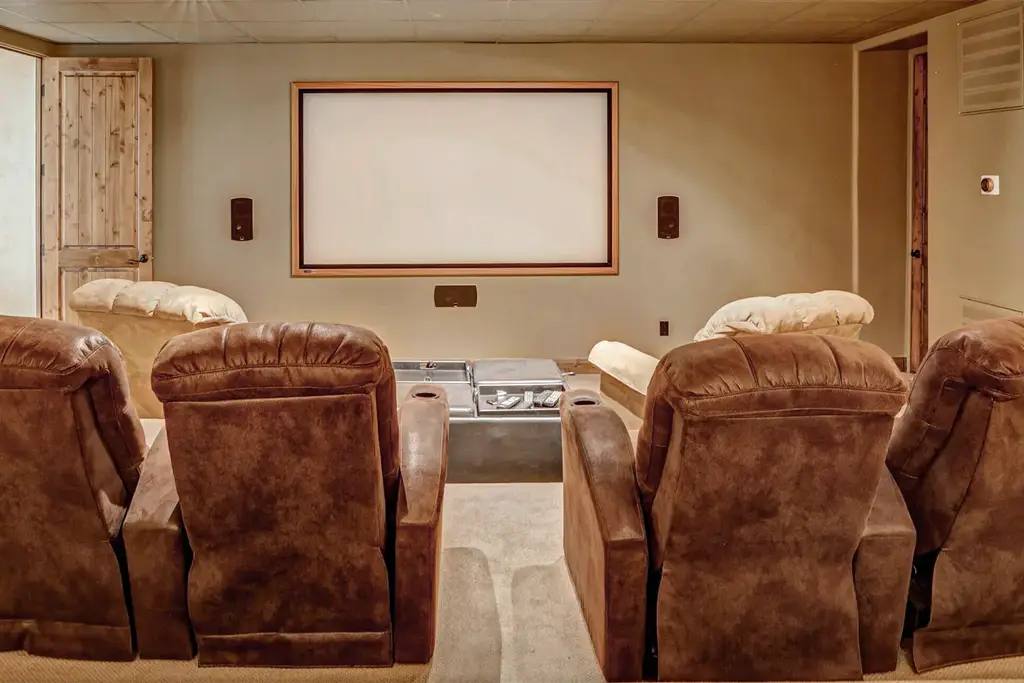
Planning a basement finishing project is not just about adding square footage. The goal is to create a space that fits naturally with how you live in your home.
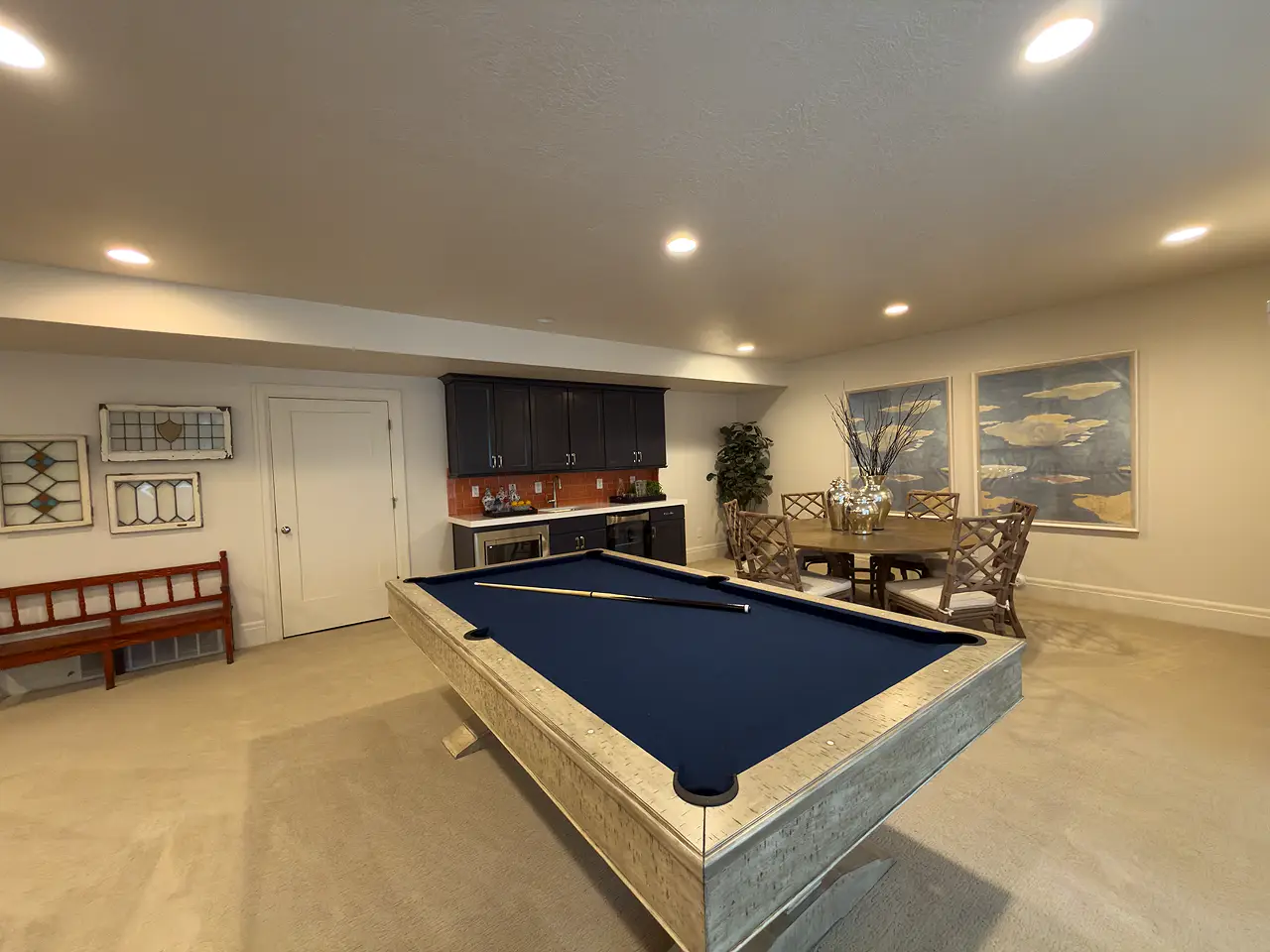
Planning a basement finishing project is not just about adding square footage. The goal is to create a space that fits naturally with how you live in your home.