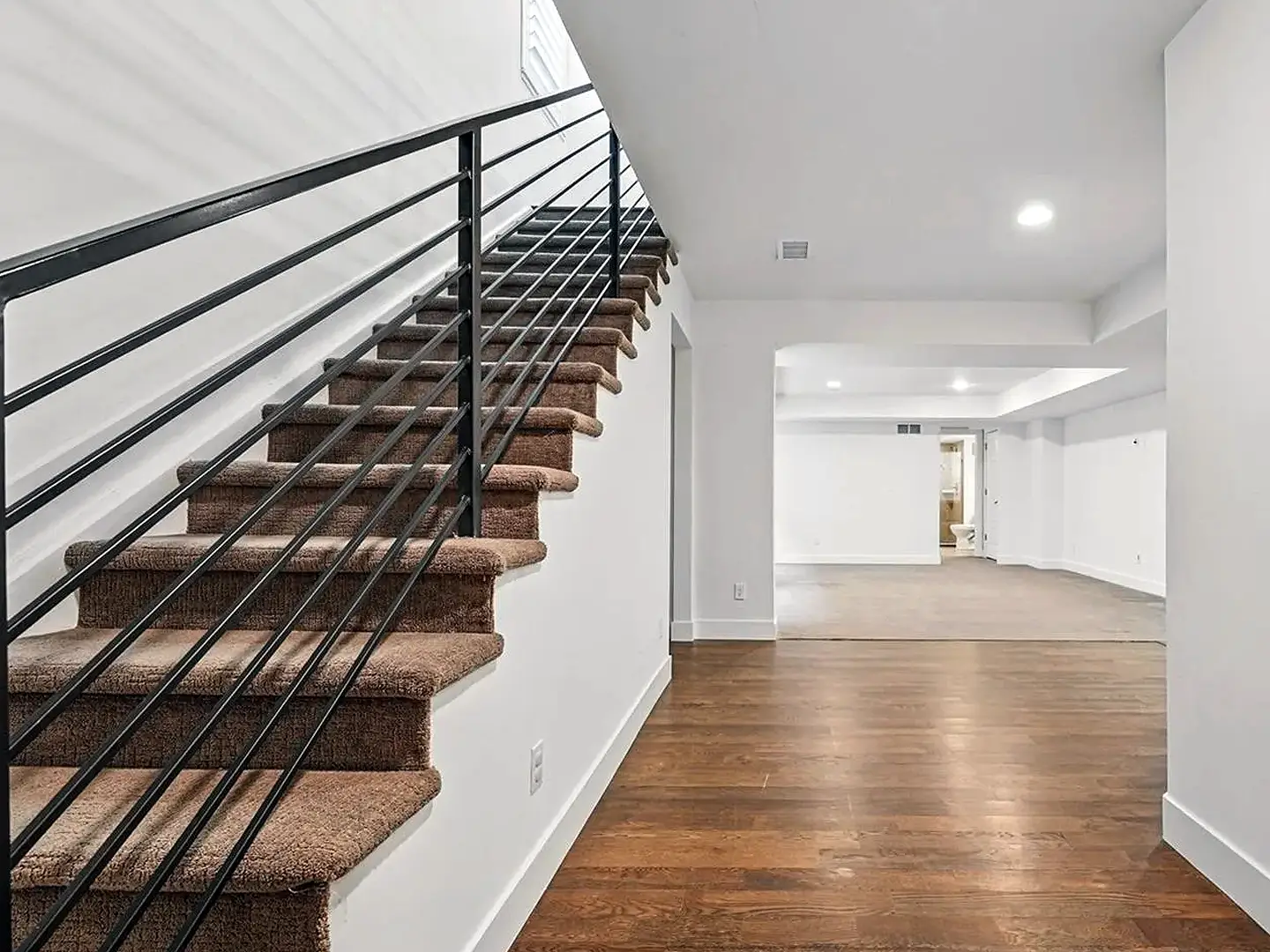
Flooring Choices for Stairs: What Homeowners Should Know
When finishing your basement, flooring is often one of the biggest visual upgrades and stairs are no exception. Because stairs connect high-traffic areas, they need flooring that can handle daily use, resist wear, and still look great doing it. On top of that, stairs require materials that provide enough traction to keep your family safe.
If you’re deciding how to finish the stairs in your home especially during a remodel or basement finishing project this guide breaks down the most popular flooring options along with their pros and cons to help you make an informed choice.
Carpet (Full Carpet or Carpet Runner)
Carpet remains one of the most common choices for stairs because of its comfort, quiet feel, and safety benefits.
Pros
- Soft underfoot: Carpet provides cushioning, which is especially great for families with kids or pets.
- Slip-resistant: One of the safest options because of its natural traction.
- Noise reduction: Helps keep your home quieter ideal when stairs lead to a basement or second floor.
- Budget-friendly options: Carpet is often one of the most affordable stair covering materials.
Cons
- Wear patterns over time: Stair treads experience concentrated foot traffic, which can flatten or discolor carpet more quickly.
- Cleaning challenges: Carpet can trap dust, hair, and allergens. Stairs are harder to vacuum thoroughly.
Less modern aesthetic: While stylish carpets exist, they may not provide the sleek, modern look some homeowners want.
Luxury Vinyl Plank (LVP)
LVP has exploded in popularity because it’s durable, waterproof, and affordable. Many homeowners choose to match stair treads with their vinyl flooring in the basement or main level.
Pros
- Highly durable: Resists scratches, scuffs, and moisture making it ideal for high-use stairs.
- Budget-friendly: Costs less than hardwood but delivers a similar wood appearance.
- Consistent look: Using LVP on the stairs and throughout the home creates a cohesive design.
- Easy to clean: A simple sweep and mop is usually enough.
Cons
- Slipperiness: LVP flooring is slippery. Not the best option for stairs.
- Installation complexity: The materials are harder to work with the carpet and the installation is more costly as a result.
- Sound quality: LVP flooring is louder. It’s a solid surface that doesn’t baffle sound the way that carpet will
Hardwood (Solid or Engineered)
Harwood floors look great. They are less popular now due to cost and durability. They are significantly more expensive than LVP, and they do not wear well, especially if they get wet or are exposed to moisture.
Pros
- They look great: This is a timeless look. If you like wood, you can’t beat hardwood flooring.
- Long lifespan: Standard (non-engineered) hardwood floors can be refinished several times.
- Increases home value: Finding real hardwood in a house is like finding a prize in a box of cereal. An unexpected and welcome treat.
- Easy to clean: They do clean easily, but you have to be careful with water.
Cons
- Higher cost: They are hard to install. They are hard to finish. They’re expensive.
- Slippery surface: Hardwood can be slick, especially when polished. Adding rugs or anti-slip strips may be necessary.
- Damage: They are not as hard to damage as LVP. So they can scratch and dent.
- Sensitive to moisture: They are not recommended in basements due to the potential for moisture. Harwood and moisture do not mix.
Laminate Flooring
They look like hardwood (mostly) but they’re sort of waterproof and durable. They have mostly replaced hardwood floors for a reason.
Pros
- Affordable: You can get a nice laminate floor for about $6.00 per sq. foot installed.
- Scratch-resistant: Not bulletproof but very durable. I have laminate floors in my home, and they still look great 12 years after installation.
- Attractive designs: They look like wood. Wood is always great.
Cons
- Separation: If you buy a cheaper laminate, it can start to separate, leaving gaps that just look bad.
- Slipperiness: Not a huge issue because you want the planks to be textured. But still, they’re not carpet so maybe not idea for those who may slip.
- Difficult repairs: If a tread gets damaged, replacing it may require removing multiple pieces, which can be time-consuming and expensive.
Wood Trim Sides with a Carpet Runner
This just looks classy. The caps come in various materials, even LVP, and there pre-manufactured so they’re relatively easy to install. And did I mention they look great?
Pros
- High-end look at a moderate cost: This says it all. This just looks great and definitely give your home a particular look.
- Customizable: You can choose the stain color, paint color, and finish to match your home.
- Easy to maintain: Treads can be re-stained or touched up as needed.
- Popular in Utah homes: Especially effective for staircases leading from main floors to basements.
Cons
- More maintenance: Stained wood treads may show scratches faster than vinyl or laminate.
- Slipperiness: Like hardwood, traction may need to be improved with rugs or stair runners.
- Visible dust: Dark or gloss finishes show everything! Don’t do it. They look great in the showroom but are a pain to live with.
So What’s Right for You?
Id recommend LVP and Carpet for basements:
- Cost: Two of the most affordable flooring options.
- Looks: both look great.
- LVP: Super durable
- Carpet: Warm, mostly soft and not slippery.
For most families, the decision comes down to a balance between safety, durability, aesthetics, and budget, and either carpet or LVP wins for most of these items.
Your stairs endure some of the highest foot traffic in your home, so choosing the right flooring matters. Whether you prefer the quiet comfort of carpet, the durability of LVP, or the timeless appeal of hardwood, the key is selecting a material that fits both your lifestyle and the overall design of your home.
If you’re in Utah and considering a basement finishing or home remodel, we can help you choose the best stair flooring and install it with precision.
Call us: 385-343-7847